
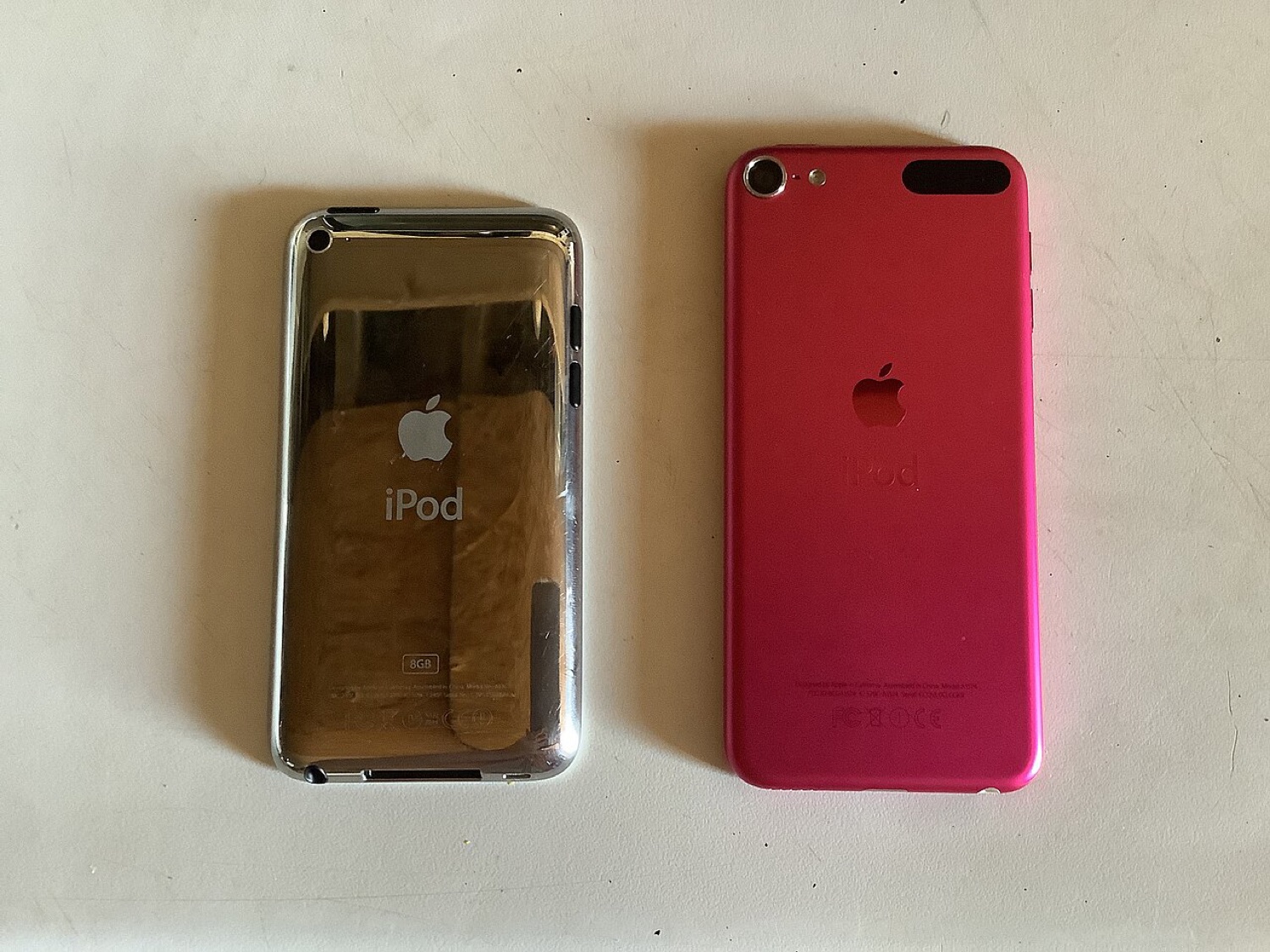
An iPod touch 4th generation next to a pink iPod touch 6th generation. Photo: Piperpet, CC BY-SA 4.0, via Wikimedia Commons.
When this blog was busiest, a single tweet from a well-known hacker could send millions of people to their computers to wait for a release. Those days are gone. Jailbreaks still appear, but they reach a small audience of researchers and enthusiasts. Several forces came together to make that happen.
1. iOS got much harder to break
Each iOS generation added layers: stronger sandboxing, kernel protections, pointer authentication on newer Apple chips and more checks on what code can run and when. A full jailbreak chain now needs several high-value vulnerabilities at once. Those same bugs can be worth a great deal to security firms and through Apple's own bug bounty programme, so fewer of them end up in free public tools.
2. Apple absorbed the best ideas
Control Center, interactive notifications, home screen widgets, dark mode, custom lock screens, default browser and mail choices, free icon placement: one by one, the features that drove people to jailbreak arrived in stock iOS. We trace that list in tweaks that became iOS features. Every one of those additions removed a reason to take the risk.
3. Cydia lost its centre
For years Cydia was the jailbreak community's shop window. In late 2018 its creator announced that he was shutting down the paid Cydia Store because running it no longer made sense. Newer package managers such as Sileo and Zebra took over, but the scene became more fragmented, and many long-running tweak developers moved on to other work.
4. One last big moment: checkm8
In 2019 a researcher published checkm8, a bootrom exploit affecting iPhones with A5 through A11 chips, from the iPhone 4S to the iPhone 8 and iPhone X. Because bootrom code cannot be patched by a software update, it gave those devices a permanent opening and powered the checkra1n jailbreak. It was a landmark, but it only applies to hardware that is now several generations old.
5. Apps started saying no
Banking, streaming, workplace and payment apps increasingly detect modified devices. The strictest are licensed real-money gaming apps: sportsbooks and online casinos must prove to regulators that their software runs on an untampered device in a permitted location, so a jailbroken phone is often blocked outright. We explain why in why betting apps refuse to run on jailbroken iPhones.
What remains
Modern community jailbreaks tend to be "rootless", leaving the system partition untouched, and they target specific older iOS versions. The people who use them are mostly security researchers, tweak developers and collectors keeping vintage iPhones alive. It is a smaller world, but an interesting one, and it still teaches a lot about how phones are secured.